Swelling, heavy limbs, or a puffy feeling can make your body feel uncomfortable even after a full night’s sleep. Lymphatic drainage massage uses light, rhythmic movements to encourage fluid movement through the lymphatic system.
The technique is different from a regular full body massage, Swedish massage, or deep tissue massage. It can support people with certain swelling problems, but it isn’t a detox cure or a weight-loss treatment. Understanding the method, safety limits, and therapist’s training helps you choose the right care.
Key Takeaways
- Manual lymphatic drainage uses gentle, slow strokes rather than strong pressure.
- It may help manage some forms of lymphedema and swelling when a trained professional performs it.
- Active infection, blood clots, serious heart failure, and severe kidney disease require medical clearance or avoidance.
- General spa massage isn’t automatically the same as clinical manual lymphatic drainage.
- Seek healthcare advice when swelling is new, painful, one-sided, or unexplained.
What Is Lymphatic Drainage Massage?
The lymphatic system is a network of vessels, nodes, and tissues that helps move fluid and supports immune function. When fluid collects in the tissues, the area may feel tight, heavy, or swollen. This can happen after certain surgeries, cancer treatments, injury, or conditions affecting lymph flow.
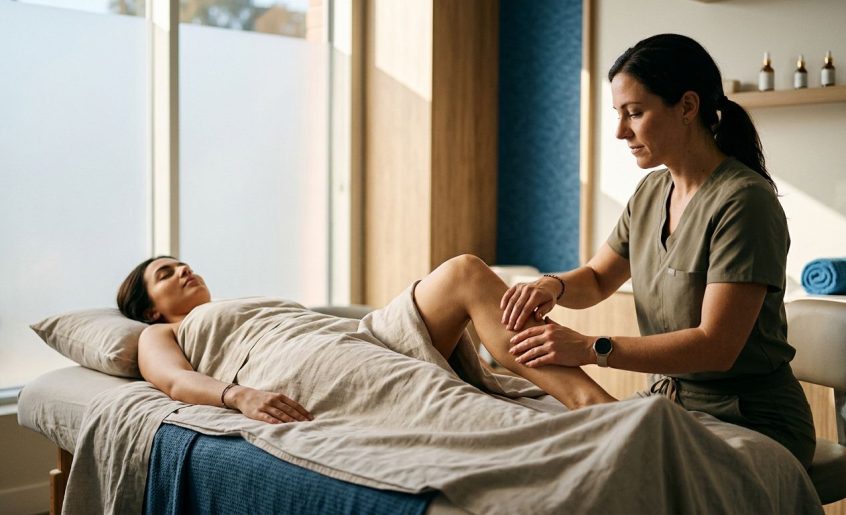
Manual lymphatic drainage, often shortened to MLD, is a specialized massage technique. A trained therapist applies very light pressure and follows the body’s lymph pathways. The sequence may begin near the neck, chest, or trunk before moving toward the affected area. This approach helps prepare nearby drainage routes instead of pressing directly on swollen tissue from the start.
The experience usually feels slow and calming. Strong kneading, forceful friction, and deep pressure are not the goal. A therapist may also discuss compression garments, movement, skin care, and medical follow-up when lymphedema is involved.
A spa treatment marketed as a lymphatic massage may offer relaxation and temporary changes in surface swelling. However, clinical MLD requires more than a treatment name. Ask about the practitioner’s specific education and experience with lymphatic conditions.
Lymphatic Drainage Massage Benefits and Limits
The clearest use for lymphatic drainage is swelling management, especially for some people with lymphedema. A therapist may use it as part of a wider plan that includes compression, exercise, skin care, and medical monitoring.
Some clients also report a temporary feeling of lightness or reduced tightness after a session. Facial treatments may make puffiness look lower for a short time. These effects don’t mean that the massage removed body fat or toxins.
A systematic review of manual lymphatic drainage found mixed evidence across conditions, with some studies reporting improvements in pain or edema. The results depend on the cause of swelling, the treatment plan, and the quality of the research.
UCLA Health also separates reasonable expectations from cosmetic claims. Its explanation of lymphatic massage and the evidence notes that swelling may reduce temporarily, while there is no evidence that MLD causes weight loss.
This distinction matters when comparing lymphatic massage with a massage gun, back massager, massage chair, or foot massager. Those devices may provide comfort for muscle tension, but they don’t replace an assessment for lymphatic swelling. Strong vibration or pressure may also be unsuitable for certain medical conditions.
How It Differs From Swedish, Thai, and Deep Tissue Massage
Many people search for a massage spa near me when they want relaxation, sore-muscle relief, or help after a long week. Those goals usually point toward a different treatment.
Swedish massage uses flowing strokes, kneading, and pressure changes to promote relaxation and ease general muscle tension. Deep tissue massage targets deeper layers of muscle and connective tissue. Thai massage often combines assisted stretching, compression, and movement.
Lymphatic work uses much lighter pressure. The therapist focuses on skin-level movements and the direction of fluid pathways. A session shouldn’t leave you feeling bruised or intensely sore.
| Massage style | Common focus | Typical pressure |
|---|---|---|
| Manual lymphatic drainage | Lymph flow and selected swelling | Very light |
| Swedish massage | Relaxation and general muscle tension | Light to medium |
| Deep tissue massage | Persistent muscular tightness | Medium to firm |
| Thai massage | Compression, stretching, and mobility | Variable |
| Foot massage | Tired feet and local comfort | Light to firm |
At Happiness Massage & SPA, visitors can explore massage treatments such as Swedish, Thai, deep tissue, relaxing, herbal, and foot massage. Ask the spa whether a requested lymphatic service is performed by a practitioner trained in MLD, or whether it is a gentle wellness massage inspired by the technique.
What Happens During a Session?
Your first appointment should begin with questions, not immediate pressure. The therapist may ask why you want the treatment, where you have swelling, whether you recently had surgery, and which medications or medical conditions could affect massage.
Wear comfortable clothing and share any areas that feel painful or sensitive. Depending on the treatment area, you may remain partially clothed under a sheet. Your comfort and privacy should guide the session.
The therapist may start around the neck and upper chest. Next, they may work along the trunk and limbs using small, slow strokes. The hands usually stretch the skin gently and release it, rather than sliding forcefully across the body.
You may notice warmth, relaxation, a need to urinate later, or no immediate change at all. Results vary. Increased pain, dizziness, shortness of breath, or a sudden worsening of swelling is a reason to stop and seek medical advice.
A massage video can show general hand movements, but it cannot identify the cause of swelling or adapt treatment to your health history. Self-massage should follow guidance from a qualified clinician or lymphoedema therapist, especially after surgery.
Who Should Avoid It or Get Medical Clearance?
Lymphatic drainage isn’t suitable for everyone. Don’t book a session over unexplained swelling until a healthcare professional has assessed it. Sudden swelling in one leg, chest pain, breathlessness, redness, warmth, or severe pain can require urgent care.
Cleveland Clinic’s guidance on lymphatic drainage massage safety lists blood clots, cellulitis, and deep vein problems among reasons to avoid treatment. Other conditions also need caution.
Delay treatment or obtain explicit medical clearance if you have:
- An active infection, fever, cellulitis, or open wound
- A known or suspected blood clot
- Unstable heart failure or serious cardiac disease
- Severe kidney disease or fluid-management problems
- Uncontrolled blood pressure
- Recent major surgery
- Active cancer without approval from your oncology team
- Pregnancy, especially early pregnancy or a high-risk pregnancy
- Diabetes with reduced sensation or poor wound healing
- Fragile bones, acute injury, or unexplained fluid retention
Cancer-related guidance can differ. Some people receive lymphatic treatment after cancer surgery, but the timing and technique should come from the treating medical team. The same applies after cosmetic surgery. Never assume that a spa’s availability means a procedure is medically appropriate.
Choosing a Qualified Therapist in Nairobi
If you’re searching for “massage near me,” “massage spa Nairobi,” or “Nairobi massage near me,” compare more than photographs and prices. A reliable provider should explain who performs the treatment and how they screen clients.
Ask these questions before booking:
- What training does the therapist have in manual lymphatic drainage?
- Do you treat post-surgical swelling or lymphedema?
- What health information do you need before the appointment?
- Will you refer me to a clinician if my swelling seems unusual?
- Which pressure and techniques will you use?
A general massage therapist may be excellent at relaxation work without having clinical MLD training. Both services can be valuable, but they address different needs.
For people looking around Kilimani, a search for “Massage spa Kilimani” or “Massage Parlour Kilimani” can produce many options. Review the service description carefully. A calm spa environment, professional communication, clean linens, and an intake process are useful signs, but they don’t prove clinical qualification.
Happiness Massage & SPA provides a range of wellness treatments in Kilimani. Its Kilimani massage spa guide can help you compare relaxation, focused bodywork, foot massage, and other available services. Contact the spa directly to confirm whether a therapist offers formal MLD and whether your health situation is suitable.
Common Search Terms and Better Booking Choices
People often use broad searches such as “massage parlour near me,” “massage places near me,” “massage therapy near me,” or “massage near me open now.” These terms can help you find nearby businesses, but location alone doesn’t show whether the service matches your needs.
For a sore back after exercise, sports recovery, or ordinary muscle tension, Swedish, deep tissue, hot oil, or Thai massage may be more suitable. For tired feet, choose a dedicated foot massage. If you want care at home, search for mobile massage Nairobi and confirm the therapist’s credentials before sharing your address.
Those seeking a “massage spa near me low price” should still check hygiene, privacy, therapist training, and cancellation terms. A lower price isn’t useful if the provider doesn’t understand your medical history.
Tools such as a massage app, massage chair, or home massage device can support relaxation. They shouldn’t be used over suspected clotting, infected skin, fresh surgical areas, or unexplained swelling. Online listings can also contain unclear terms, so avoid relying on massage ads or social media claims that promise detox, rapid slimming, or guaranteed results.
When to Speak With a Healthcare Professional
Consult a doctor or qualified physiotherapist before booking if swelling lasts, returns often, or affects daily movement. You should also seek advice when one side is noticeably larger than the other, the skin changes color, or the area becomes hot and painful.
Medical assessment matters because swelling has many possible causes. It may relate to lymphatic damage, a vein problem, infection, medication, heart or kidney disease, or an injury. Massage cannot diagnose these conditions.
After medical clearance, a trained therapist can adjust the session to your condition. Keep communication open during treatment. Gentle should still feel comfortable, and you should never feel pressured to continue through pain.
Conclusion
Lymphatic drainage massage can be a gentle option for selected swelling problems and a calming wellness experience when performed appropriately. Its strongest role is supportive care, not weight loss, detoxification, or a cure for an underlying disease.
Before you book, identify your goal, disclose your health history, and confirm the therapist’s training. If swelling is sudden, painful, infected, or unexplained, speak with a healthcare professional first. The right massage begins with safe assessment, not stronger pressure.