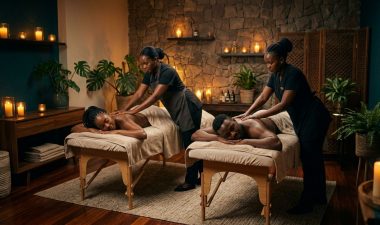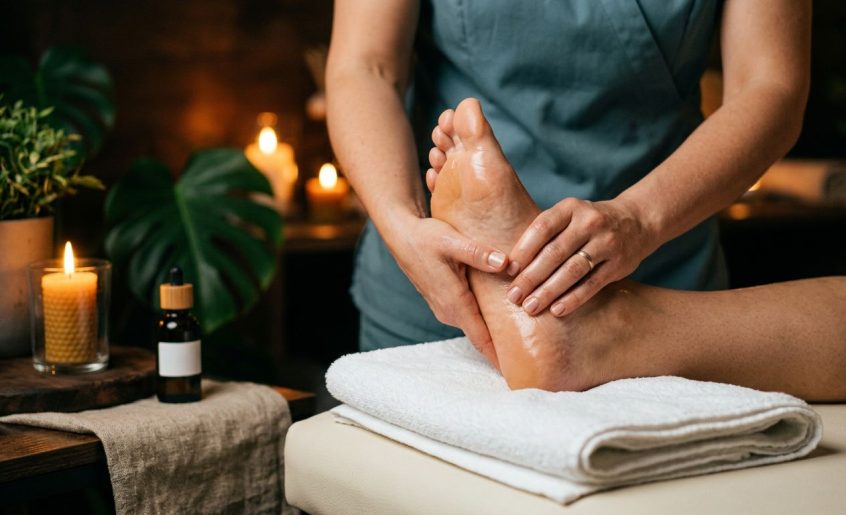
After a long day, your feet often carry more tension than you realize. A few minutes of focused foot massage can ease that tight, heavy feeling and help your body settle before sleep.
Massage can support relaxation and short-term comfort, but it isn’t a cure for unexplained pain or illness. The best results come from gentle pressure, clean technique, and knowing when a qualified clinician should assess your feet.
Key Takeaways
- Foot massage may reduce everyday tension, improve comfort, and promote relaxation.
- A safe home routine uses oil or lotion, gradual pressure, and slow movements.
- Pain, numbness, swelling, wounds, or diabetes require professional guidance.
- A trained massage therapist can adjust pressure and technique to your needs.
- Choose a reputable massage spa with clear services, hygiene standards, and respectful care.
What Foot Massage Can Do for Tired Feet
Your feet contain many small muscles, joints, tendons, and connective tissues. Standing, walking, running, and wearing stiff shoes can leave these structures feeling tense. Gentle massage may help you feel more comfortable by warming the tissues and reducing the sensation of tightness.
Relaxation is one of the clearest reasons people book a treatment. Slow strokes can encourage calmer breathing and help release the physical tension that builds during a busy day. Some people also find a foot massage helpful before bed, especially when their feet feel restless after work or travel.
Massage doesn’t repair a fracture, treat an infection, or correct every cause of heel and arch pain. Evidence for specific medical benefits varies, so it’s better to describe foot massage as a comfort and relaxation practice rather than a stand-alone treatment. Medical News Today outlines foot massage techniques and potential benefits, including simple methods that can be performed at home.
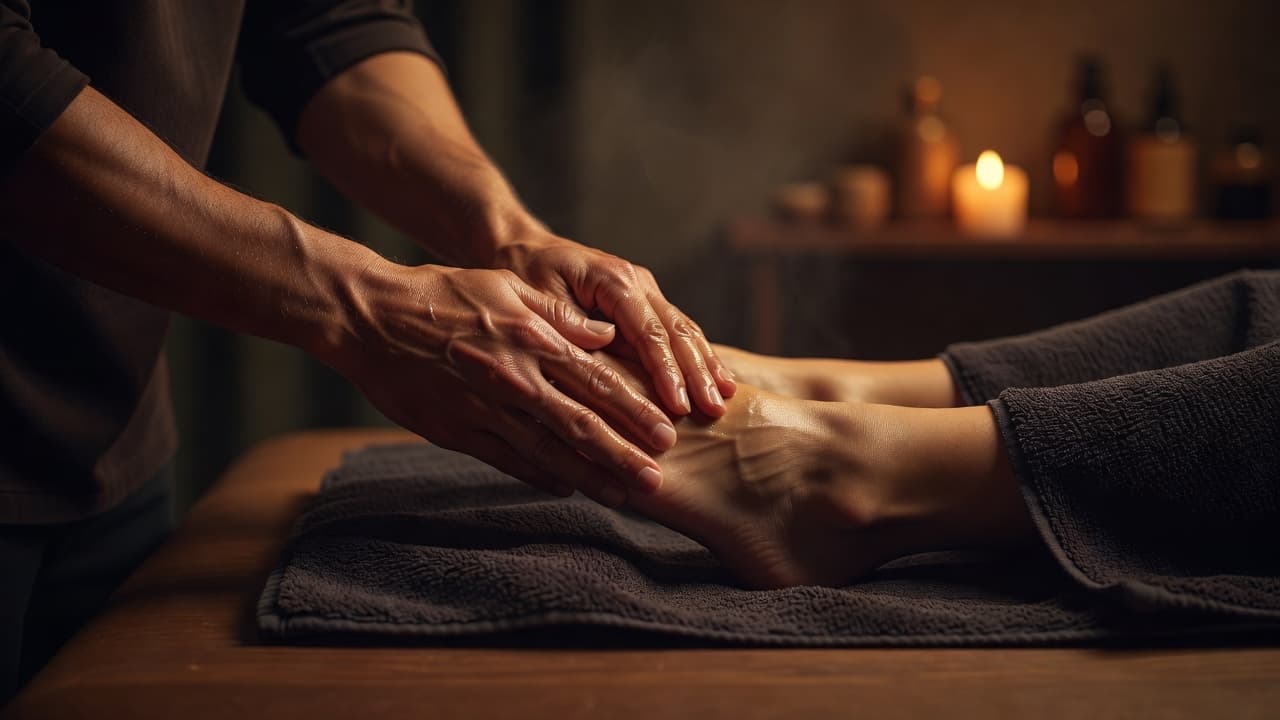
A professional session can also help you notice how different pressure feels across the heel, arch, ball, and toes. A Swedish massage usually uses flowing strokes and light-to-medium pressure. Deep tissue massage applies firmer work to selected areas, so it shouldn’t feel sharp or forced.
People sometimes ask whether massage can improve circulation. Gentle rubbing may create temporary warmth and local blood-flow changes, but persistent coldness, skin color changes, or swelling needs medical assessment. Massage shouldn’t replace care for vascular or nerve problems.
A Safe Self-Massage Routine at Home
Set aside 10 to 15 minutes. Sit comfortably with one foot supported on a towel or cushion. Use a small amount of unscented lotion or massage oil so your hands glide without dragging the skin.
1. Start with broad strokes
Warm the foot with both hands. Glide from the toes toward the ankle using light pressure, then return along the sides. Repeat for about one minute. This first stage helps you notice tender areas before applying more pressure.
2. Loosen the sole
Hold the heel in one hand and use the thumb of your other hand to make slow circles through the arch. Move from the heel toward the ball of the foot, staying on the soft tissue rather than pressing directly into painful joints.
Keep the pressure comfortable. A feeling of mild tenderness can be acceptable, but sharp, burning, electric, or worsening pain means you should stop.
3. Work across the heel and ball
Use your knuckles or the heel of your palm to make gentle horizontal strokes across the heel. Then sweep beneath the ball of the foot, where pressure often accumulates after long periods of standing.
Avoid forcing the toes backward. The small joints in the toes need controlled movement, not aggressive stretching.
4. Massage each toe
Pinch each toe lightly between your fingers and thumb. Glide from its base toward the tip, then make one or two small circles around the joint. Stop if you feel pain, tingling, or unusual sensitivity.
5. Finish at the ankle
Circle around the ankle bones with your fingertips. Follow with light strokes up the lower leg. Don’t press into the front of the ankle or any area that looks swollen or injured.
Repeat the routine on the other foot. Drink water if you like, then stand slowly because relaxed feet can feel slightly different when you put weight on them.
Massage should feel soothing or pleasantly firm. Numbness, stabbing pain, bruising, and lingering soreness are signs to reduce pressure or stop.
Techniques and Tools That Can Help
Different techniques suit different goals. Effleurage means long, gliding strokes that help warm the skin and begin or end a session. Kneading gently lifts and compresses soft tissue. Thumb circles work well around the arch, while light compression can relax the heel and ball of the foot.
A foot massager can provide rolling, vibration, heat, or air compression. If you’re considering one, review this foot massager buying guide for practical details about pressure, heat, timers, and safe use.
A massage gun is usually too intense for the sole and toes. Its rapid percussion can irritate sensitive tissue, especially over bones, joints, or inflamed areas. A massage chair may relax the back and legs, but it won’t give you the same control as hands-on work. A manual roller is often easier to control than either device.
Don’t use a back massager on your feet unless the manufacturer clearly approves it. Tools designed for larger muscle groups may apply excessive force to the delicate structures under the foot.
Choosing a Foot Massage in Nairobi
A good session begins with a clear conversation. Tell the massage therapist whether your feet feel tired, tight, sore after exercise, or sensitive to pressure. Mention previous injuries, current symptoms, and any medical conditions before the treatment starts.
If you’re searching for a provider, terms such as Massage spa Kilimani, Massage Parlour Near Me, Massage Parlour Kilimani, or Massage Kilimani massage can produce different results. Searches for massage near me, massage spa near me, massage spa Nairobi, massage Nairobi, Nairobi massage near me, and foot massage near me are also common.
Search results need careful review. Listings for Nairobi massage ladies, Nairobi massage ads, Nairobi massage parlour, Nairobi massage parlors, and Nairobi massage services may not provide enough information about training, hygiene, prices, or boundaries. Phrases such as Nairobi massage body to body, Nairobi massage and extras services, and Nairobi massage and extras services contact can lead to unclear or suggestive listings, so choose a provider with a professional service menu and transparent communication.
People also search for massage places near me, massage therapy near me, Nairobi massage center, massage near me open now, massage near me current location, massage app, or massage spa near me low price. Low price and convenient hours shouldn’t outweigh cleanliness, consent, and qualified care.
For location-based searches, you may see massage in Langata, Nairobi massage near yaya centre, Nairobi massage Westlands, westlands Nairobi massage, Nairobi massage spas, or mobile massage Nairobi. Other searches include Thai massage near me, full body massage Nairobi, full body massage near me, full body massage Mombasa, couples massage Nairobi, couples massage, full body massage for women, and full body massage for couples.
Some online terms, including massage video, body massage video, Nairobi massage spa telegram, Nairobi massage republic, massage heights, elements massage, massage warehouse, massage envy, Asian massage, and hand and stone massage, may refer to videos, directories, or businesses outside your area. A search for 20 types of massage can also help you compare styles, but foot comfort should guide your choice. Swedish, Thai, or full body massage may include the feet, while a dedicated foot treatment gives them more attention.
At Happiness Massage & SPA, you can review the Trekker’s foot massage treatment when your feet need focused recovery after walking or travel. Ask about pressure, session length, and whether the therapist can adapt the treatment to your comfort.
When to Avoid Massage or Seek Medical Advice
Don’t massage over open wounds, blisters, burns, rashes, bruises, or areas that feel hot and inflamed. Wait until a qualified professional confirms that massage is safe after a fracture, sprain, surgery, or other acute injury.
Speak with a clinician before booking if you have diabetes, reduced sensation, known circulation problems, blood-clot concerns, severe varicose veins, or unexplained swelling. Diabetes deserves extra care because nerve changes can reduce your ability to feel excessive pressure or heat.
Stop immediately if massage causes increasing pain, numbness, pins and needles, dizziness, skin discoloration, or unusual warmth. One-sided calf swelling with pain, chest pain, or sudden shortness of breath needs urgent medical attention rather than massage.
Pregnancy also calls for sensible precautions. A trained prenatal professional can advise on safe positioning and pressure, especially when swelling or other symptoms are present. Healthline discusses foot massage during pregnancy, including situations where medical advice matters.
Persistent heel pain, arch pain, or pain that changes the way you walk deserves assessment. Massage may support comfort while you recover, but it shouldn’t delay diagnosis or treatment.
Conclusion
Regular foot massage can be a simple way to ease everyday tightness, support relaxation, and give tired feet focused care. Use slow strokes, moderate pressure, and tools cautiously, especially around bones and sensitive areas.
A professional treatment adds experience and adjustment, but safety comes first. When pain, numbness, wounds, swelling, or circulation concerns appear, pause the massage and speak with a qualified clinician. Your feet carry you through every day, so comfortable care should never come at the cost of ignoring a warning sign.